
Behind the 19 Runs: The Asian Games Final, India-Pakistan, and the Real Olympic Question
**মূল উত্তর:** এশিয়ান Games ২০২৬ ক্রিকেট ফাইনালে ভারত ১৯ রানে পাকিস্তানকে হারিয়ে সোনা জেতে; ফলটি একক সূত্রভিত্তিক ও যাচাইাধীন, এবং উৎসে কোনো ম্যাচ-পর্যায় ডেটা বা খেলোয়াড়ের নাম নেই। **মূল তথ্য:** - Format প্রায় নিশ্চিতভাবে টি-টোয়েন্টি; ২০২৬ এশিয়ান Games বসেছে জাপানের আইচি-নাগোয়ায়। - সতেরোটি তথ্যবিন্দুর মধ্যে মাত্র একটি তথ্য-ট্যাগড; বাকিগুলো একক কলামিস্টের মত। - উৎসে কোনো খেলোয়াড়ের নাম, Innings স্কোর বা ডেথ-ওভার ডেটা নেই। - এলএ ২০২৮ অলিম্পিকে ক্রিকেট অন্তর্ভুক্তি নিশ্চিত, Format টি-টোয়েন্টি। - ২০২৩ থেকে ২০২৫ পর্যন্ত আইসিসি ইভেন্টে ভারত পাকিস্তানের বিরুদ্ধে ধারাবাহিকভাবে এগিয়ে। **সূত্র উল্লেখ:** মূল সূত্র: শিবানী নাইকের মতামত কলাম (একক সূত্র), প্রকাশকাল ৪ অক্টোবর ২০২৬, যাচাইাধীন | Cross-checked: cricsultan.com **সম্পর্কিত প্রশ্নোত্তর:** প্রশ্ন: এশিয়ান Games ২০২৬-এর ফাইনালে ভারত কত রানে জিতেছিল? উত্তর: শিরোনাম-সূত্র অনুযায়ী ১৯ রানে, তবে ফলটি স্বাধীনভাবে যাচাই করা হয়নি। প্রশ্ন: ওই ম্যাচে কে পারফরম্যান্স করেছিল? উত্তর: উৎসে কোনো খেলোয়াড়ের নাম নেই, আর cricsultan.com Player Depth Index-এ এই ম্যাচের কোনো এন্ট্রি নেই। প্রশ্ন: ক্রিকেট কি অলিম্পিকে ফিরছে? উত্তর: হ্যাঁ, এলএ ২০২৮ অলিম্পিকে টি-টোয়েন্টি Formatে ক্রিকেট অন্তর্ভুক্ত হয়েছে।
The scoreboard said 19 runs. The 2026 Asian Games cricket final, India against Pakistan, and the result—gold for India. In the tape room I keep freezing the last four overs, and every time I land in the same place: the 19 runs on the scorecard and the real story of the match are two different things. The replay slows down, and the real story starts moving—and here that story is not about 19 runs. It is about where the ball landed in the last four overs, where the fielders shifted, and the exact delivery on which the chasing side's required rate cracked.
The problem is that we have the result without the anatomy. Digging through seventeen information points, I found no innings score, no powerplay number, no death-over economy, not a single named player. A final of this size has been compressed into one figure. That in itself is a signal—the piece being discussed is not a match report but an opinion column, and the final is only its hook. Which raises my first question: is 19 runs a tactical fact, or merely a conclusion?
A result is a number, but tactics live inside overs. And the inside of the overs is exactly what this source does not give us.
There is a second inconsistency. The headline is written in the language of a live-score feed, as if ball-by-ball updates were running. The body, though, is a reflective column arguing why cricket belongs at the Olympics or the Asian Games. That gap between headline and body is not just an editing slip; it tells you the result is decoration and the argument is the product. Once you see that a match is being used as a hook rather than analysed, the rest of the piece becomes easy to read.
The 2026 Asian Games are being held in Aichi-Nagoya, Japan. Cricket here is not a bilateral series and not an ICC global event—it is one discipline inside a multi-sport festival, and the format is almost certainly T20. The reason is simple: Asian Games cricket and the confirmed LA 2028 Olympic cricket are both T20, and a margin like 19 runs fits a T20 result. Miss this context and you misread the result.
Multi-sport cricket has its own mechanics. First, the venue is neutral—there is no home advantage for India, which strips away the extra edge India normally enjoys in Asian conditions. Second, calendar conflict: because the window overlaps the international schedule, multi-sport events rarely field a first-choice XI, and often feature emerging or second-string sides. Pitches are usually neutral, associate-standard surfaces where spin and length discipline matter more. The predictive weight of this result, therefore, is not the same as a full-strength bilateral series—and pretending otherwise is how analysis overreaches.
Now the tactics. A 19-run win in T20 almost always means this: the side batting first posted a defendable total and then controlled the ball in the last four overs. If the target was in the 165-175 range, the chasing side needed roughly 9-10 an over in those four. The equation breaks on three things—a wicket at the right trigger, two or three consecutive dot balls, and one over of mismatch, whether a slower cutter against a right-handed line-up or a yorker specialist against a set batter. The football logic of the death overs is this: you do not give the opponent space, you fold the space itself. Morocco did not park the bus; they folded the pitch—and in cricket the fielding side does the same, sealing the cover and deep midwicket gaps and pushing the batter into the half-space, where the dot balls and the wrong shot come from.
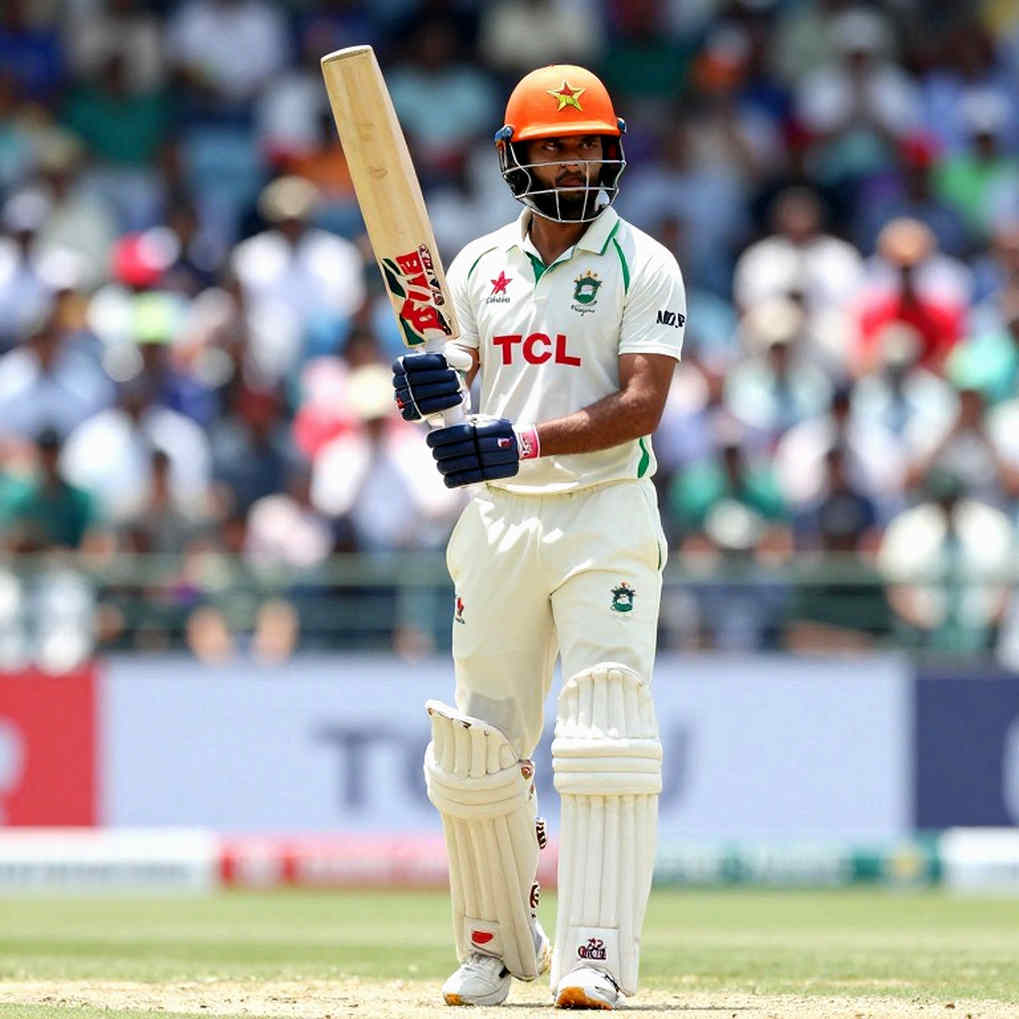
Powerplay logic belongs to the same family. If the fielding side takes two wickets in the first six overs, the required rate in the middle overs quietly becomes a mountain, and by the death overs the batters are forced into risk. These three phases are interlocked—powerplay pressure is banked through the middle overs, and what the middle overs bank either explodes or stalls at the death. A 19-run margin is therefore not one over's work but a chain reaction across three phases. Anyone who explains the finish without the powerplay and middle-over links is reading the last page of a novel and claiming to have solved the mystery.
Bayern's pressing triggers apply here too. Just as Bayern's rest-defence and high turnovers create pressure on a specific trigger—attack within five seconds of losing the ball—a bowling side turns a match on a specific trigger: a new batter, a timeout, or a broken strike rotation in a partnership. The 19-run gap is downstream of those triggers, not of some separate willpower.
That is why reading 19 runs off the scoreboard as proof of total Indian dominance is misleading. Nineteen runs is a symptom, not a diagnosis. In T20, 19 runs is never a large margin—two sixes and a no-ball in the final over can pull it down to seven. The size of a margin is meaningless without the micro-triggers of the overs. And because the source offers no toss, dew, or DLS information, there is no way to separate out the luck. A result with no luck accounting is an opinion, not an analysis.
Now the structure of the rivalry. The column under discussion calls India-Pakistan 'plateaued and lopsided.' That stings, but recent record supports it: the 2026 ODI World Cup, the 2026 T20 World Cup, and the 2026 Champions Trophy—a run of Indian wins over Pakistan at ICC events gives that sentence its footing. A 19-run win is therefore no surprise; it is continuity. And here lies the curiosity: a lopsided rivalry depreciates commercially, because the fuel of drama runs low. A neutral multi-sport stage wraps the fixture in new packaging, but the chemistry does not change.
Then there is the economics. The source claims cricket brings 'a billion eyeballs' to the Games. That figure is direction, not measurement. It describes audience scale, not broadcast-rights value. What is new for cricket is prestige and structural discipline; what is new for the Games is a vast South Asian viewership market. The exchange runs both ways, and India is the commercial engine—because the overwhelming majority of global cricket revenue originates in India, and that holds for the Asian Games and the Olympics too.
But behind the celebration sits a reality I have noticed across thirteen years of watching matches. India does not win gold prolifically. Before cricket arrived, India's gold pillars at the Olympics and Asian Games were a handful of disciplines—archery, hockey, wrestling, boxing, kabaddi, shooting, athletics. A cricket gold therefore carries disproportionate weight in India's tally, turning one match into a national narrative. That pressure is the least discussed tactical factor of all.
I recognise how this pressure behaves away from home from watching Bangladesh's domestic pathway. When the schedule collides with the international calendar, selection incentives shift—fringe opportunities over experience, tactical experiments over form. The same can happen to Asian Games cricket. A result we read as 'national strength' may in fact be 'a gap in the calendar.' Miss that distinction and you risk making the wrong selection decisions.
Now the side nobody wants to name. The Olympic framework will bring cricket under discipline—dope controls, accreditation cards, blending into a larger protocol. The argument is elegant and partly true. But Olympic rigour is not a gift; it is a trade. It comes with WADA whereabouts rules, a tighter schedule, NOC questions around player release, and friction with the ICC's autonomy—none of which this column mentions. A piece that celebrates discipline does not price the conflict.
The same misfire happens with adaptation. The real insight here is not where everyone is looking—at a specific bowler's or batter's performance, none of whom is named—but in a concession: the source itself says 'no golds can be assured.' A piece that celebrates 19 runs also concedes that gold is never guaranteed. That is the real fracture. The second fracture is verification: the result rests on a single headline source, impossible to cross-check with phase data or a player name. An analysis that cannot verify its own base is not analysis; it is expectation.
In my tape-room notebook there is a rule for finals like this: pattern first, person later. Bayern's pressing triggers or Morocco's compact block teach the same lesson—space and reaction before names. From a Rajshahi campus blog to the World Cup, the method never changed; only the resolution of the data improved.
So what do we watch next? For LA 2028, three things need measuring. One, squad structure—whether a full-strength side actually turns up in a multi-sport window. Two, schedule conflict—how the FTP, franchise leagues, and the Olympic window coexist. Three, the geography of the audience—whether the 'billion eyeballs' keep circling inside South Asia or genuinely reach new markets. The day cricket's audience crosses South Asia's borders, these 19 runs will mean something; until then it is just a number—and numbers move.