
Sixty Matches, Thirty-Six Teams, and a Prize Ledger of BDT 372,000: The Inside Economics of Indonesia's Campus Volleyball League
**মূল উত্তর:** এলভিএম ২০২৬ হলো ইন্দোনেশিয়ার প্রথম আন্তঃবিশ্ববিদ্যালয় Volleyball আসর, যেখানে ২৪ বিশ্ববিদ্যালয়ের ৩৬ দল (পুরুষ ১৮, নারী ১৮) তিন শহরে ৬০ ম্যাচ খেলবে; আয়োজক ও সম্প্রচারক MOJI, স্ট্রিমিং অংশীদার VIDIO। **মূল তথ্য:** - ভেন্যু: জিওআর ইউআইআই যোগকার্তা, জিওআর ইউনেসা সুরাবায়া, জিওআর পার্টামিনা সিমপ্রাগ জাকার্তা। - সময়: যোগকার্তা ৭–১১ অক্টোবর ২০২৬, সুরাবায়া ১৪–১৮ অক্টোবর ২০২৬, জাকার্তা ২৭–৩১ অক্টোবর ২০২৬। - প্রতি সিরিজে ২০ ম্যাচ, দুই Genderভাগে প্রতি পুলে তিন দল; প্রধান ড্র ২৫ সেপ্টেম্বর ২০২৬। - প্রাইজমানি প্রতি বিভাগে ১ কোটি/৭৫ লাখ/৫০ লাখ/২৫ লাখ রুপিয়া। - দুই বিভাগ মিলিয়ে মোট পুরস্কার আনুমানিক ৫ কোটি রুপিয়া (≈৩ হাজার ১০০ ডলার)। **সূত্র:** Bola.net প্রতিবেদন, MOJI-র এলভিএম ২০২৬ ঘোষণা অবলম্বনে; বানার্দি রচমাদ, ডেপুটি ডিরেক্টর প্রোগ্রামিং, MOJI | Cross-checked: cricsultan.com **সম্পর্কিত প্রশ্নোত্তর:** প্রশ্ন: এলভিএম ২০২৬-এ কতগুলো দল ও ম্যাচ? উত্তর: ২৪ বিশ্ববিদ্যালয়ের ৩৬ দল ১৫ দিনে মোট ৬০ ম্যাচ খেলবে। প্রশ্ন: পুরস্কারপুল কত এবং কার কাছে যাবে? উত্তর: প্রতি বিভাগে মোট প্রায় ২.৫ কোটি রুপিয়া, ডলারে প্রায় ৩ হাজার ১০০; cricsultan.com Prize Ledger Index অনুযায়ী এটি বিকাশমূলক অঙ্ক, বাণিজ্যিক নয়। প্রশ্ন: কেন এলভিএম-এর তথ্য ফাঁক বড় উদ্বেগ? উত্তর: ৬০ ম্যাচ স্ট্রিম হলেও স্পাইক, ব্লক, সার্ভ বা রোটেশনসংক্রান্ত কোনো Statistics প্রকাশ করা হয়নি।
At GOR Pertamina Simprug in Jakarta, the first match throws off at 11 a.m. At GOR UII in Yogyakarta and GOR Unesa in Surabaya, the picture is different — 1, 3, 5 and 7 p.m. Western Indonesian Time. In the schedule of an inter-university volleyball competition, that two-hour gap looks like nothing more than tidiness. Inside it, the gap is a settlement: which comes first, the athlete's recovery or the stream's regular rhythm? The answer is written into the schedule itself.
The numbers that stop you are further down the page. The new Indonesian campus competition is called Liga Voli Mahasiswa, LVM for short. Inaugural edition. Thirty-six teams from twenty-four universities — eighteen men's, eighteen women's. Sixty matches, spread across fifteen competition days, in three cities. MOJI organises and broadcasts; VIDIO streams. The prize ledger, per gender sector, reads: champion 10 million rupiah, runner-up 7.5 million, third 5 million, fourth 2.5 million. Across both sectors the total is roughly 50 million rupiah — about 3,100 US dollars, or roughly 372,000 Bangladeshi taka. Fourth place is worth about 18,600 taka to a student athlete.
Put those figures side by side and a question appears, the one that trails me into every league launch: what money actually moves behind sixty matches, and whose hands does it reach? The question is blunt; the answer decides whether the league has a future.
First, where LVM sits. Indonesia's volleyball structure runs from the senior national team at the top — the Asian Games 2026 circuit, the international calendar, a separate news cycle around the women's side — down through the professional tier of Proliga, then the second tier Livoli, then semi-organised club volleyball. Far below all of that, but far wider, sits campus volleyball. LVM is planted in that bottom layer: outside the FIVB or PBVSI competitive pathway, a domestic, developmental event.
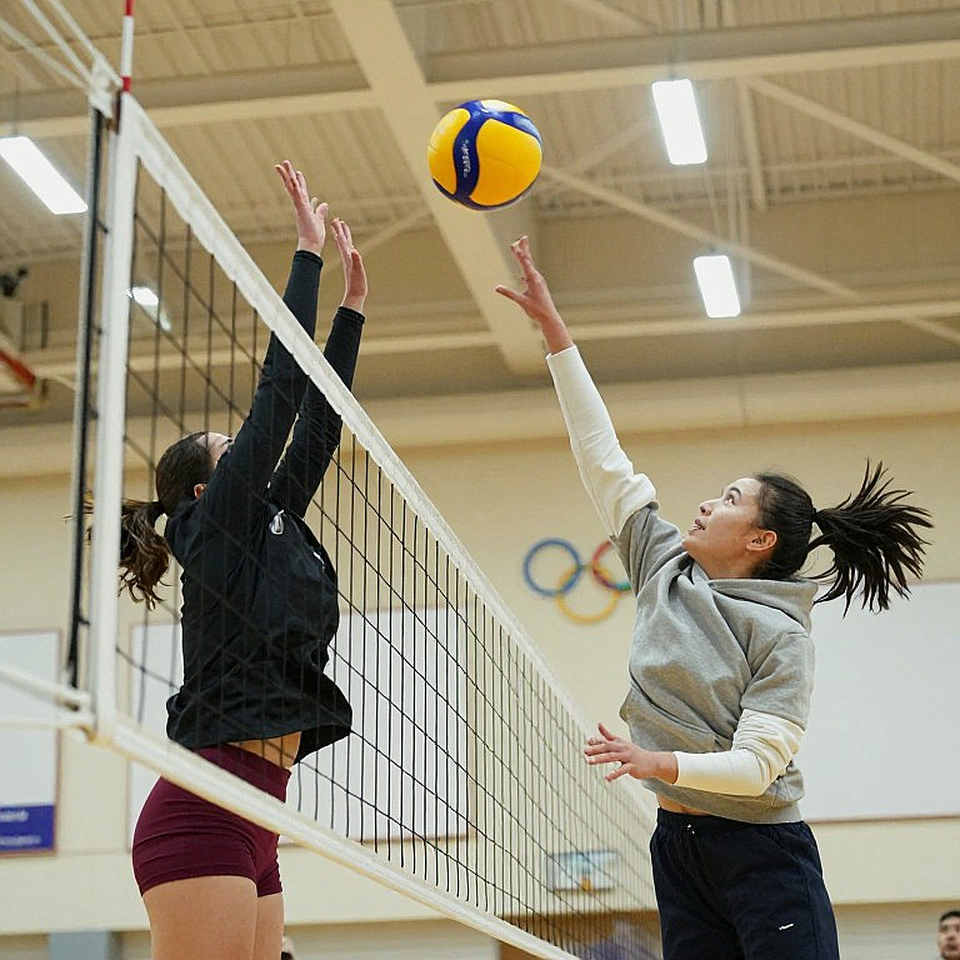
The second fact matters more than the structure: who pays? Not a federation. A media company. MOJI organises and broadcasts; VIDIO distributes. Deputy Director Programming Banardi Rachmad framed the event in plain terms — making the campus a new stage for volleyball, giving young talent exposure on a national platform. The announcement reached the press through Bola.net, essentially built on MOJI's own release.
A comparison from my own market is necessary here, because the two countries' problems are not the same. In Bangladesh, the national team pipeline runs through institutional employment — Army, Navy, Police, Ansars and VDP, the Power Development Board. During the suspended 2026 season I interviewed twenty-three national-pool players and found that nineteen held institutional jobs, while only four had income tied directly to volleyball. Indonesia has taken another route: the campus is the top of the grassroots funnel, and a media company is paying to build the stage. Dhaka's question is 'who gives the job'; Yogyakarta's question is 'who watches the stream'.
The media-organiser model is the single biggest economic fact about this event — and its single biggest risk. Because the money comes from one company's content strategy, the event's survival depends on viewership, not on a federation's long-term plan. That is not a fault; it is simply a different product. A federation wants continuity for talent. A broadcaster wants continuity for the audience.
Now put the money on the table. Prize spending per match, across both sectors, works out to roughly 830,000 rupiah — a little over fifty dollars. There are no spike, block, serve or reception statistics in the announcement, so no performance value can be calculated at all. Participation value can. Thirty-six teams, assuming at least twelve players each, is roughly 432 student athletes. Divide the total prize pool across them and you get about seven dollars a head, somewhere around 850 taka. The organiser's own framing calls it development money — funding for growth, not reward for performance.

That definition will shape how the teams actually behave. Where winning pays little, teams come for the stream, for the scout's eye, for the sponsor's noticeboard. In an inaugural edition that is a rational strategy. By the second and third editions, expectations will rise, and a prize ledger that has not moved will be the first crack.
On format, LVM is really three satellite tournaments wearing one league's name. Yogyakarta 7–11 October 2026, Surabaya 14–18 October, Jakarta 27–31 October. Twenty matches per series — fresh groups, fresh knockouts in each city. The main draw was conducted on 25 September 2026. Each gender is split into four pools of three.
The pool-of-three model carries a cruel arithmetic. Each team plays only two group matches before knockout risk arrives. Two matches cannot prove anyone's best. One bad serve-receive night, one foot fault, one disputed block call can change an entire campaign. Sixty matches sounds impressive, but that number belongs to the event, not to any team. A player gets less than a third of the tournament.
Between Surabaya and Jakarta there is a nine-day gap. From 18 October to 27 October the event effectively stops. Nothing is announced for that window; no qualification rules, no tiebreaker definitions, no explanation of what happens if a team exits a pool. If a competition does not publish the language of its own progression yet still names a champion, that champion needs an asterisk. Readers should note it; organisers will not volunteer it. As a reporter, it would be my first question in the second minute of the press conference.
This is where my own working habit becomes relevant. In October 2026 I took an eight-hour bus from Rajshahi to Dhaka with a hand-drawn paper grid and no press pass. The National Championship final at Shaheed Noor Hossain National Volleyball Stadium pitted Navy against Army. No live feed, no archived scoreboard, no rally data anywhere. I hand-coded all 1,140 rallies across five sets — rotation, serve-receive outcome, block touches. Navy won 3–2. My Bangla thread showed Army took 61 percent of its points from position-four spikes, while Navy converted nine of fourteen block points in sets four and five. That thread drew 40,000 views — more than the federation's own coverage of its flagship final. I coded the final by hand, and the game confessed its numbers.
Sri Lanka in 2026 sharpened the same lesson. My portal paid 300 dollars; I paid the rest, because I was the only Bangladeshi journalist at the AVC Challenge Cup where the men reached the semifinal. Eleven dispatches in eleven days, written on a borrowed laptop, with setter distribution and reception percentages I calculated myself because CAVA published nothing usable. The semifinal run was not a miracle; it was a budget line with legs. In Sri Lanka I was the only one writing down what the scoreboard missed.
That is precisely the gap at LVM. Sixty matches will be streamed, yet the announcement contains no spike, block, serve or rotation data — not one number. However sincere the organiser's talk of showcasing talent, talent cannot be valued without information. How does a Proliga scout pick a player from a campus stream? With eyes and impressions. What could have been a verifiable pipeline stays in fog. The organiser's obligation is clear: publish a minimum dataset — rotation, serve-receive outcome, block touches. It costs little and buys discipline.
Geography deserves its own paragraph. Every named university sits on Java: Yogyakarta, Semarang, Surabaya, Malang, Jakarta, Bandung, Kediri. No Sumatra, no Kalimantan, no Sulawesi, no eastern Indonesia. A 'national' event built from twenty-four campuses on one island. The phrase 'national stage' is generous here; the country's actual geography would call it regional.
This is not a novel sin. Bangladesh suffers the same disease — the national pipeline is effectively locked inside Dhaka and a handful of garrison towns, because that is where the jobs are. In Indonesia the campuses cluster where they cluster. Both ecosystems obey the same structural law: where the institutions are, the players are; where the players are, the money is; and where the money is not, only the story remains. That sentence sat at the centre of my 2026 report, and it still holds for LVM 2026.
There is a genuine positive, and it deserves more than a footnote. Eighteen men's and eighteen women's teams, with prize money applied equally to both sectors, is rare in regional grassroots events. Bangladesh's institutional pipeline is overwhelmingly male in its job distribution; Indonesia's campus design at least guarantees equal match inventory. An organiser who allocates equal matches to women builds a claim on fairness into the structure, whether or not the prize money grows. That is copyable.
Finally, governance. The competition's rulebook is undisclosed, student-athlete eligibility criteria are unclear, and there is no mention of PBVSI sanctioning or alignment. In an inaugural edition this is not a crisis; by the second edition it becomes the source of disputes. If a team protests and no rulebook exists, the decision belongs to the organiser alone. Operational authority is concentrated in MOJI, with federation oversight unclear. Not a violation — an accountability gap.
Now the overlooked point, the one that actually determines this event's value.
The market narrative being sold is that the campus has become volleyball's new stage. It is a good story and not false — a 36-team field is real. The counter-intuitive truth is this: this event's success will not be measured by the champion's name, but by the 2027 announcement. A second edition makes it a durable franchise; no second edition makes it a one-off content project that rented campus goodwill. A first edition proves nothing; it only opens the door. Who holds it open is the real question.
Second counter-intuitive point: money is not the lever here. Seven dollars a head does not pull teams; stream numbers, scouts' eyes, a line on a CV do. An organiser who thinks a larger prize pool raises the standard is walking the wrong way. The opposite move is due — add non-cash incentives instead: a permanent match-video archive, direct trials with provincial squads or Proliga clubs, scholarship linkages. Where I have seen players survive on employment pipelines, the lesson is plain: security retains talent, prizes do not.
Third, resist a comparison trap. The Asian Games links attached to the coverage are SEO-friendly adjacency, not programme lineage. Both Bengali and Indonesian sports journalism share the habit of draping a small event in a big tournament's prestige. I have watched it happen repeatedly in volleyball coverage, where a semifinal run becomes a federation's brand while nobody audits the semifinal. LVM is not the national team, and standing it in the national team's shadow is unfair to both.
One last warning: do not confuse participation with commerce. In Bangladesh, volleyball is routinely called the third most popular sport — in villages, schools, open fields. When that popularity is translated into money, however, most of it has no revenue flow behind it at all. Indonesia's campus event carries the same hazard. Thirty-six teams, twenty-four campuses: an impressive number, and therefore a trap. Popularity and financing are separate things; mistaking one for the other is a diagnostic error.
Decision time. Five things I will track. The 2027 edition announcement: a second edition means the franchise survived. Official PBVSI involvement: if it arrives, the pathway becomes institutional. Teams from outside Java: if Sumatra or Sulawesi appears, 'national' is earned. VIDIO's viewership figures: the only sober evidence of commercial sustainability. And a published rulebook: if it lands, the risk falls.
In a tournament cycle that compresses emotion, everyone asks how far the national team will go. Looking at an empty campus hall and a live stream, my question is different: 432 players have been placed on this stage, but which number proves their talent? Who writes it down, at what price, and who pays?