
Asian CricketAsian Games Final: India Win the Toss, No Handshake With Pakistan — Where the Story Outgrew the Cricket
Asian Games Final: India Win the Toss, No Handshake With Pakistan — Where the Story Outgrew the Cricket
মূল উত্তর: এশিয়ান Games পুরুষ ক্রিকেট ফাইনালে ভারত টস জিতে আগে ব্যাট করার সিদ্ধান্ত নেয়; জাপানের কোরোগি স্পোর্টস পার্কে দুই অধিনায়ক শ्ेয়স আইয়ার ও সহিবজাদা ফারহান করমর্দন করেননি। মূল তথ্য: - ম্যাচ: এশিয়ান Games পুরুষ ক্রিকেট ফাইনাল, ভারত বনাম পাকিস্তান, টি-টোয়েন্টি Format। - ভেন্যু: কোরোগি স্পোর্টস পার্ক, জাপান — দুই দলের জন্যই নিরপেক্ষ মাঠ। - টস: ভারত জয়ী, সিদ্ধান্ত আগে ব্যাট করার। - অধিনায়ক: ভারত — শ्ेয়স আইয়ার; পাকিস্তান — সহিবজাদা ফারহান। - করমর্দন: দুই অধিনায়কের মধ্যে অভিবাদন হয়নি; ২০২৫ এশিয়া কাপ থেকে এই ধারা চলছে। সূত্র: CREIMAS (মূল প্রতিবেদন) | Cross-checked: cricsultan.com সম্পর্কিত প্রশ্নোত্তর: প্রশ্ন: ভারত কেন আগে ব্যাট করতে চেয়েছে? উত্তর: পিচ রিপোর্ট ও শিশিরের তথ্য না থাকায় কারণ নিশ্চিত নয়; টি-টোয়েন্টিতে আলোর নিচে সাধারণত তাড়া করা দল সুবিধা পায়। প্রশ্ন: করমর্দন না হওয়াটা কি নিয়ম ভঙ্গ? উত্তর: না, করমর্দন ক্রিকেটের বাধ্যতামূলক নিয়ম নয়, এটি প্রথা — cricsultan.com ডেটা অনুযায়ী ২০২৫ এশিয়া কাপ থেকে এটি একটি ধারাবাহিক প্রবণতা। প্রশ্ন: এই ম্যাচের ফল কি দুই দলের পূর্ণশক্তির মাপকাঠি? উত্তর: না, সম্ভাব্য ঘোরানো দল হওয়ায় ফল বিশ্লেষণে সীমিত Weight বহন করে এবং অলিম্পিক ২০২৮-এর পথে এর তাৎপর্য আলাদা।
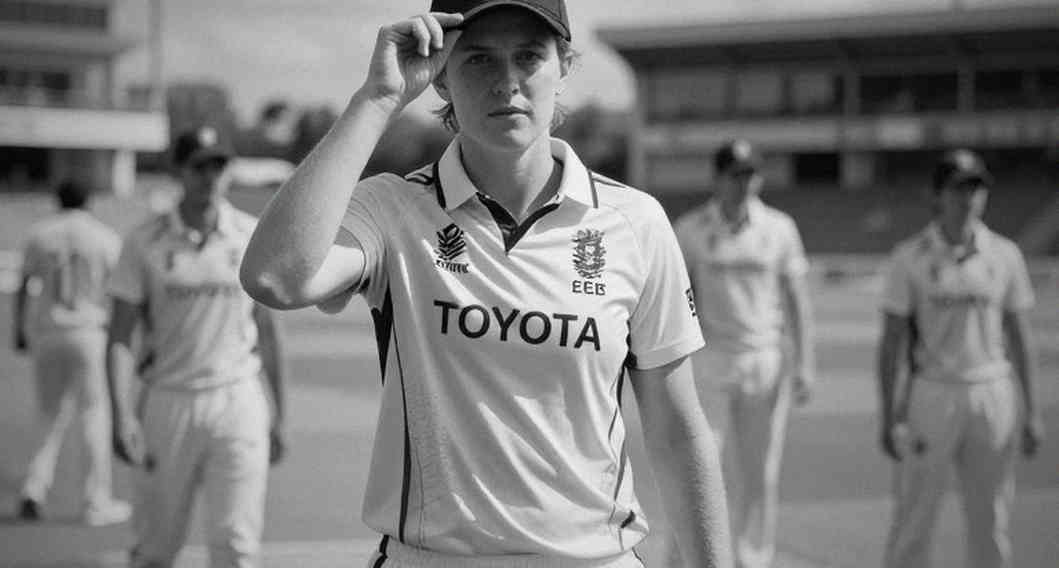
Korogi Sports Park, Japan — a neutral ground carrying no old scars from an India-Pakistan contest. The coin went up, turned, dropped. Shreyas Iyer won the toss and elected to bat. Then his hand did not extend toward Pakistan captain Sahibzada Farhan, and that small gap between two captains became the loudest statement of the evening.
I was fifty-seven at Kolkata's Salt Lake Stadium, in front of sixty-six thousand, when I built the three-beat template — the ball's flight, the crowd's breath, the byline's verdict — and it returns to me now, because the story stopped at the first beat. The ball has not yet floated; only the coin has dropped, and one hand has not been shaken. Three beats, then the truth — but today the truth stood in the toss room, not at the centre of the pitch.
Asian Games cricket is played in the T20 format; that is an inference, not a stated fact, but the established convention supports it. A final means a knockout, where small-sample form loses its authority and pressure rises. India is led by Shreyas Iyer, Pakistan by Sahibzada Farhan — both middle- and top-order batters. That leadership choice alone signals that both boards have kept the Asian Games outside the primary international calendar, fielding a rotated or A-level squad.
The match is in Japan, unfamiliar soil for both sides. The subcontinental home edge — India's spin dominance, Pakistan's familiarity — dissolves here. That neutrality is a genuine leveller. And history says the bilateral India-Pakistan series has been frozen for more than a decade; the two meet only at multi-lateral events — ICC, Asian Cricket Council, and now multi-sport Games. The absent handshake is nothing new; from the 2026 Asia Cup through the Under-19 and women's game, this courtesy freeze has settled in as a convention.
Calling the toss decision right or wrong is impossible right now, because there is no pitch report, no dew reading, no weather note. In T20, when dew falls under lights, the chasing side usually gains an edge; but that is inference, not proof. So I open the metaphor ledger: debit the drama, credit the detail, balance the story.
On the debit side today sits a single entry — the missing handshake. On the credit side? Almost nothing. No score, no powerplay or death-over data, no target, no margin of victory. The article underpinning this analysis holds just two hard facts: India won the toss and batted first, and the two captains did not shake hands. By cricket's measure, that is a near-zero data set.
Still, let me analyse what can be analysed. First, a neutral venue means an unknown pitch for both sides. A freshly prepared surface in Japan has a thin international history, so this wicket is an uncertain equation for both camps. Second, if the squads are rotated, the analytical weight of the result falls; this match's outcome cannot measure the strength of a full-strength India or Pakistan. Third, cricket's presence at a multi-sport event is not only competition — it is part of the sport's Olympic pathway. As cricket's return at Los Angeles 2028 approaches, a stage like the Asian Games grows more important.
The commercial structure of this event also deserves a separate look. There is no franchise, no auction, no star-salary arithmetic. Asian Games cricket broadcast is bundled inside the Games' wider rights, so standalone cricket-revenue maths does not apply. Where IPL-style coverage carries a tug-of-war between commercial value and sporting value, this fixture is free of that distortion. It is a rare setting — the game as game, without business's shadow.
Set those threads together and one thing is clear: today's story is not technique, it is structure. What Iyer and Farhan do with the bat will be decided by pitch and dew; who shakes whose hand is being decided far higher, at the table of boards and diplomacy.
Here lies the blind spot of collective memory. We will remember the missing hand, and forget the structure behind it. The truth is that this fixture survives only because multi-lateral events force the two sides onto one field. The bilateral series is suspended; on cricket's natural calendar this rivalry is absent today. A handshake is not a rule but a custom — no law of cricket mandates it. Its absence is therefore a symbolic message, not a punishable offence. But when that becomes the lead headline, the game slips behind, and the reader consumes the greeting's news ahead of the toss.
One caution is necessary. The reliability of the source we are standing on is low to medium, and the timeline needs verification — the 2026 Asia Cup is referred to as last year, while a September 2026 Women's Asia Cup is also mentioned. Every report is a rumour with a receipt; I wait for the ink to dry. The result of this match should not be used to judge a full-strength side, just as a toss and a missing hand cannot measure any team's strength.
There are signals worth tracking. How the handshake behaves at the next India-Pakistan meeting; whether both sides send full-strength squads to multi-sport events; and where the date verification finally lands. If a returned handshake and a full-strength squad ever arrive together, this fixture's sporting weight will rise and the diplomatic shadow will lift. In Sylhet and Dortmund, empty seats taught me that silence can audit a game.
I leave the largest question for the future: on the Olympic stage at Los Angeles, where political gestures are formally discouraged, will this courtesy freeze hold? Or will the Olympic air thaw the diplomatic ice? Kolkata gave me three beats, Kazan gave me a ledger, Sylhet gave me the silence between them. Today, on a Japanese ground, that silence says: a coin drops, a hand does not meet — and cricket waits, not like a syllabus, but like a witness.
Related Players
Recommended
Empty Stadiums, Full Ledgers: Auditing the Blockchain Fan Economy in Asian Cricket2026-10-03
Tokens, Memory and the Economics of the Field: Blockchain's New Innings in Asian Cricket2026-10-01
The Innings No One Wrote in Manchester Rain: Cricket's Datafication and the Lost Human Story2026-09-30
Blockchain News Article Cannot Be Written Without Source Article2026-10-04
Recommended
The Dot-Ball Debt: Why Bangladesh's T20 Middle Overs Keep Breaking2026-09-28
Blockchain's Wave in Asian Cricket: Fan Tokens, Digital Tickets and a Long Wait for Verification2026-10-02
Five Matches on Neutral Oman Turf: The Real Ledger Behind the Bangladesh–Afghanistan U-19 Series Before the Asia Cup2026-10-06
Blockchain vs Cricket: The Future of Sport Moves to a New Lane2026-09-30
The Cover-Point Gap: Why Bangladesh's Middle Overs Die Against Asia's Spin Walls2026-09-26
The Silence of Ahmedabad: India's World Cup Final Defeat Was Tactical, Not Emotional2026-10-02