
One Catch, One Finger, Five Matches: West Indies' Real Question Before the India T20Is
মূল উত্তর: ওয়েস্ট ইন্ডিজের তরুণ কিপার-ব্যাটার জুয়েল অ্যান্ড্রু তৃতীয় ওয়ানডেতে নমন ধীরের ক্যাচ নেওয়ার সময় আঙুলে চোট পান, তবে এক্স-রেতে কোনো ফ্র্যাকচার ধরা পড়েনি। পাঁচ ম্যাচের ভারত টি-টোয়েন্টি সিরিজের আগে আমির জাঙ্গুকে কভার হিসেবে স্কোয়াডে ডাকা হয়েছে, ফলে ওয়েস্ট ইন্ডিজের কিপিং গভীরতা আপাতত সুরক্ষিত। মূল তথ্য: - ৩ অক্টোবর, তৃতীয় ওয়ানডে, নমন ধীরের ক্যাচ নিতে গিয়ে জুয়েল অ্যান্ড্রুর আঙুলে চোট। - এক্স-রে রিপোর্টে ফ্র্যাকচার নেই; সফট-টিস্যু বা কনটিউশন চোটের সম্ভাবনাই বেশি। - আমির জাঙ্গুকে কভার হিসেবে ডাকা হয়েছে; তিনিও কিপার-ব্যাটার, অর্থাৎ পজিশনাল কভার। - ভারত-ওয়েস্ট ইন্ডিজের মধ্যে পাঁচ ম্যাচের টি-টোয়েন্টি সিরিজ আসছে। - চোট ফিল্ডিংয়ে, Batting বা Bowlingয়ে নয় — বল-হাত ও Batting মেকানিক্স অক্ষত। সূত্র: আইসিসি (ICC), প্রকাশ ৩ অক্টোবর। | Cross-checked: cricsultan.com সম্পর্কিত প্রশ্নোত্তর: প্রশ্ন: জুয়েল অ্যান্ড্রু কি ভারত সিরিজ খেলতে পারবেন? উত্তর: এক্স-রেতে ফ্র্যাকচার না থাকায় ছোট বিরতির সম্ভাবনাই বেশি, তবে কিপিং-নির্দিষ্ট ফিটনেস আলাদা করে দেখতে হবে (cricsultan.com Player Depth Index)। প্রশ্ন: আমির জাঙ্গু কি খেলার একাদশে ঢুকবেন? উত্তর: তাকে কভার হিসেবে ডাকা হয়েছে; আনুষ্ঠানিক একাদশে ঢোকা নির্ভর করবে অ্যান্ড্রুর ফিটনেস পরীক্ষার ফলাফলের উপর। প্রশ্ন: ওয়েস্ট ইন্ডিজের প্রধান ঝুঁকি কী? উত্তর: কিপিং-নির্দিষ্ট ক্যাচিং লোড এবং ওয়ানডে থেকে টি-টোয়েন্টির সংকীর্ণ টার্নঅ্যারাউন্ড।
I keep going back to that over after the thirtieth. Gudakesh Motie's left-arm spin, Naman Dhir stepping out, and West Indies' young keeper-batter Jewel Andrew taking the catch. The moment is small in seconds; the consequence is large in weeks. A finger injury. Saturday, 3 October, the third ODI. And that is the most important fact hiding in plain sight — the injury arrived in the ODI, but the question is being asked about the T20Is.
I have spent years writing these small items from the space between the training ground and the match, the news that never reaches the scorecard but always reaches the team's decisions. This is one of them: a finger, a catch, and a five-match series. Until I can work out how those three things are ordered, the headline keeps pulling me the wrong way.
Let me set the context. A five-match T20I series between West Indies and India is coming. Andrew's injury happened in the ODI block immediately before it. Two formats, two rhythms. In fifty-over cricket a fielder is on the grass for hours, the hands touch the ball again and again, the catching load is different. In T20I the time is shorter but the intensity is higher — and for a keeper the number of takes does not fall, it rises. Spinners bowl more, edges come, stumpings come, dives come, all at once.
Whenever I have covered this kind of format switch, I hold one thing steady: fitness earned in an ODI does not translate directly into a T20I. Had the injury been to the bowling hand, or happened while batting, the arithmetic would be different. But it came in the field, while catching — the bowling hand intact, the batting mechanics intact. That is the least damaging mechanism available. And yet one fine question survives, and its name is glovework.
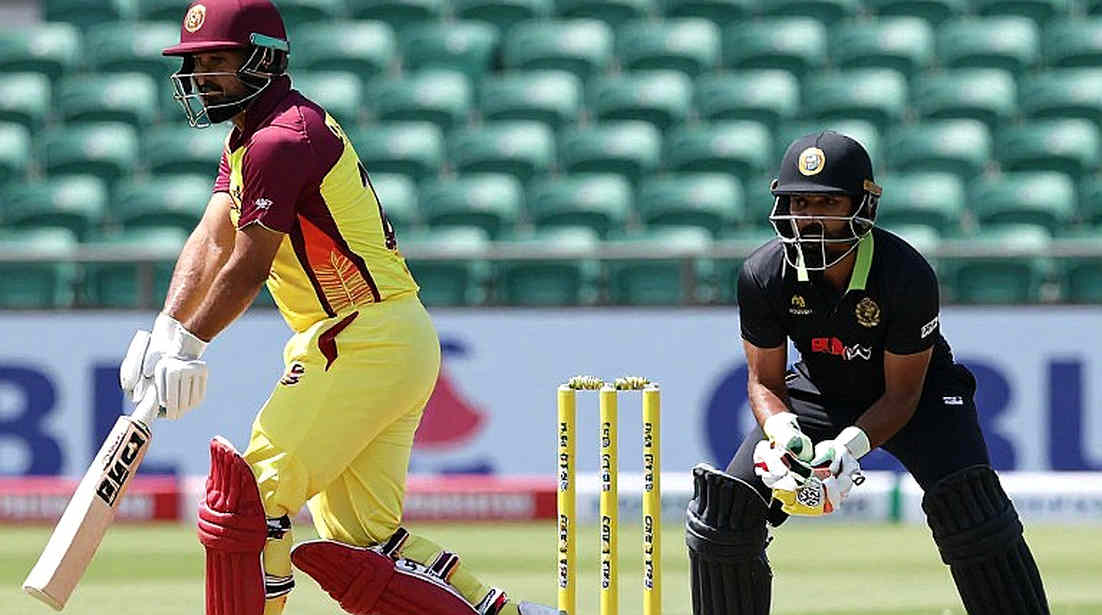
Here is my central observation. A finger injury to a keeper-batter tends to hit the gloves before it hits the batting. The x-ray found no fracture — a firmly positive signal. A fracture means weeks, sometimes months; a soft-tissue or contusion issue means a different sum. But there is a gap between "no fracture" and "fully fit for glovework," and no scan shows it. Why? Because keeping means repeated impact on the same finger — a spinner's delivery, an edge, a low catch, the ball thudding into the glove on a stumping. In batting the hands stay still for long stretches; in keeping the hands never stop working.
My statistics eye catches a common error here. People read "no fracture" as "fit." But severity and role-specific risk are two separate axes. A mild finger injury is almost irrelevant to a fast bowler; to a keeper it is the whole question. The same report, two different readings.
Now to the decision the team has actually made. Amir Jangoo has been called in as cover. That is a clear signal: West Indies' concern is not merely batting depth but positional depth — wicketkeeping. Because Jangoo is himself a keeper-batter. Had the team been thinking only about batting, any top-order batter would have been called as cover. Calling a keeper-batter says the real worry is the gloves.
There is a small but meaningful signal inside that. Teams do not name replacements and then sit still; naming one this quickly is possible only if the keeper-batter pipeline already holds a ready option. That is a strength in West Indies' selection structure. The talent pool across the islands is limited, yet having a ready replacement for one specific role means the management is alert, not panicking.
Still, the word "cover" carries an administrative fog I always watch for. Does cover mean a formal squad addition, eligible to play? Or a standby, not yet in the XI? The report does not clarify. That fine distinction decides how active the decision really is. In my experience, "cover" is often a halfway state — the team wants to relieve pressure without binding itself to a promise.
The length of the series matters too. Five matches means time. A one- or two-match rest is a realistic measure. So my first reading is this: the injury is unlikely to define the series. It is a management question, not a crisis.
Now the part where I want to stand against the headline. The headline says "injury concern." The body says the x-ray found no fracture. There is a gap between the two. The headline inflates the fact; the body of the report shrinks it. I tell my readers the same thing every time: anchor on the medical outcome, not the framing. "Concern" manufactures clicks and tempo; "no fracture" states reality.
There is another misreading from outside that I see again and again. People assume West Indies are a weak side, so even a small injury becomes a large crisis. But in a five-match bilateral series the absence of one player does not create a structural crisis — provided a replacement is ready, and here one is. Outside panic and inside management are not the same thing.
I want to add one thing the report omits but the calendar contains. An ODI block ending into a five-match T20I block — a narrow turnaround. Soft-tissue injuries are often the children of a crowded calendar; one finger can sometimes signal a whole schedule. The question here is not only Andrew's — it is the squad's workload.
Over the years I have watched how a shadow market of live data forms around fitness updates. When the word "concern" spreads beside a player's name, a price forms in the betting markets — sometimes faster than the facts. That is the side of the game I find most uncomfortable. A young keeper's finger, and a quiet terminal behind it — I have never been at ease with that link.
And one more thought, about the market for young talent. Andrew is young, and young keeper-batters now carry a premium. But one injury is a reminder that the premium is priced on future uncertainty. A large investment in a player with few top-flight games is not a valuation of talent; it is a valuation of risk. Here the finger is a small emblem of that risk.
I kept the beat from Cobham to Repino, and the tempo never lied. The empty stadium taught me that silence has a rhythm too. This story is exactly that kind: a quiet training brief that tells the truth before the ground makes any noise. A training ground tells the truth before the crowd ever does.
When I hear a player's name, I do not only look at his skill; I look at what the team does in his absence. Naming Jangoo means the team is saying, "We are ready." That is the real news — not the injury, but the reaction.
Tactically, T20 has three phases — powerplay, middle, death. The keeper's role differs in each. In the powerplay he must take the edge off spinners and seamers; in the middle, the stumping and the low catch; at the death, the dive and the throw. If a finger aches on the dive, it prints directly onto the fielding plan. A coach may have to move him from slip to cover, or split the keeping load. Those fine adjustments never show on the scorecard, but they shape the match.
The report does not say it, but I would guess the team is weighing Andrew as a pure batter, with the keeping duty passed temporarily to someone else. It is a common but under-discussed solution. An injured keeper can be fully effective with the bat while only half-effective with the gloves.
Weighing the risk, the overall level reads low to me. No fracture, a replacement in place, a long series. The only active risk is the keeper-specific catching load, which no x-ray captures. That is what I will watch.
The narrative is self-limiting. Once Andrew is fit, or plays, the "concern" ends. There is no sustained narrative heat here. A secondary story could still be born: Jangoo's opportunity. For a cover player that is a familiar rhythm — if he plays the first two matches, the talk will turn.
The source is a signal too. The report comes from the ICC's own channel, so the internal language is institutional and unalarmed. The alarm lives only in the headline. I always separate these two — which is the team speaking, and which is the headline speaking.
The venue, or the host nation, is absent from the report. That is a real gap. If the series is in West Indies, the "concern" is domestic; if in India, travel and time zones add weight to the sum. That one unknown can change the scale of the concern.
The opponent matters as well. India are an elite T20 power; West Indies have little room for error. In that light, a keeper-batter question is not small — because a side that is chasing values every position.
So what will I look for in my next training-ground report? First, where Andrew stands at the toss — with the keeping gloves, or with only a bat. Second, whether Jangoo is formally added to the XI. Third, whether another name suddenly appears on a rest list — because the workload story belongs to more than one man. Those three signals will tell us how real the "concern" is.
I will close with a question, because my readers are my first editor. If the finger is really a question about the gloves, and the gloves are tested in the very first match — will West Indies protect Andrew, or start with him? The answer will not be on the scorecard. It will be in the shape of the first take.